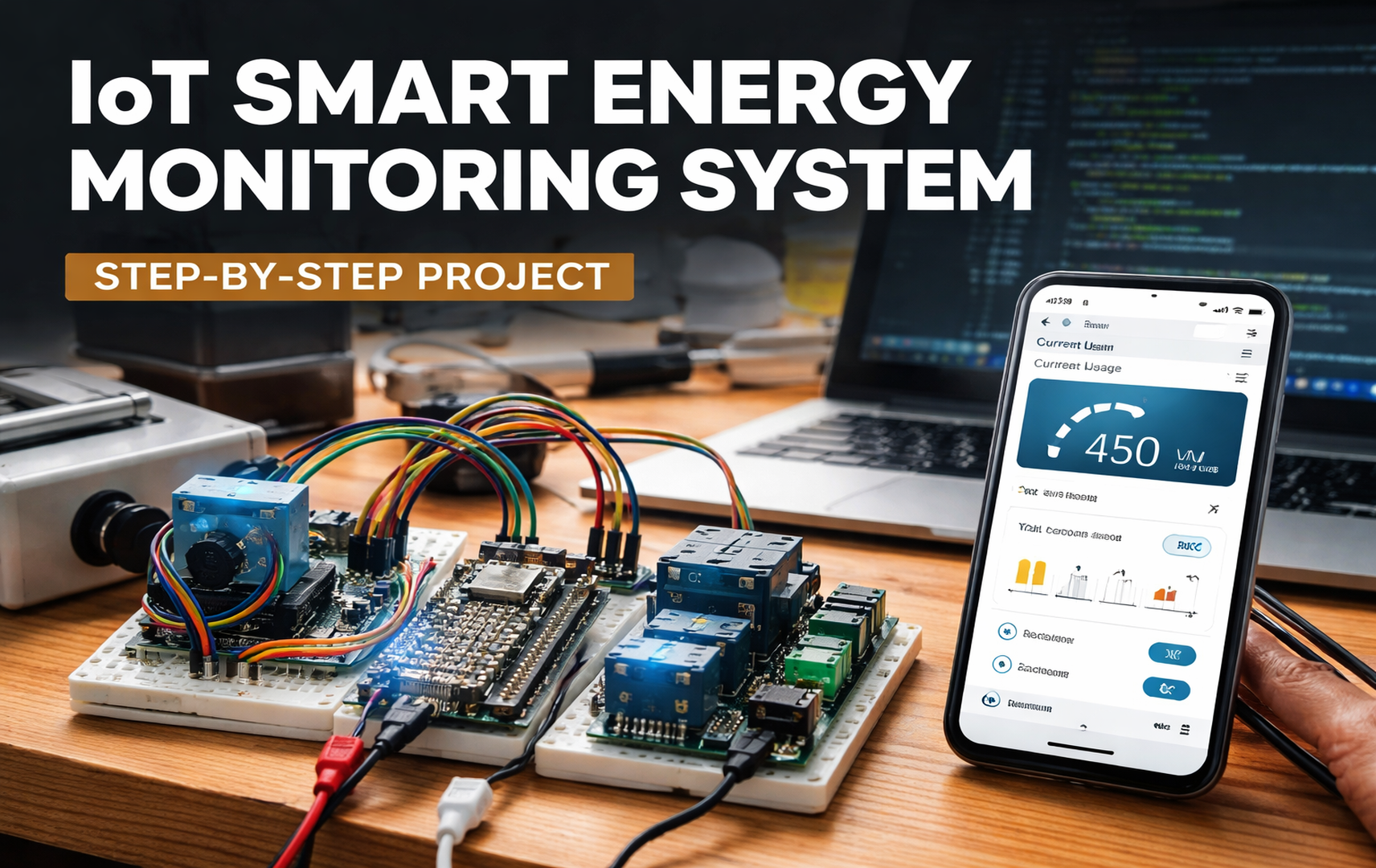
In today’s world, energy efficiency is more important than ever. In this project, I designed and implemented an IoT-based Smart Energy Monitoring System that allows real-time tracking and control of energy usage.
Project Overview
This system monitors electrical parameters such as voltage, current, and power consumption, then sends the data to a mobile app via the internet.
Components Used
- ESP32 Microcontroller
- Current Sensor (ACS712)
- Voltage Sensor Module
- Relay Module
- Power Supply Unit
- Mobile App (Flutter)
- Backend API (Django REST Framework)
System Architecture
The ESP32 reads sensor data and sends it to a cloud server using MQTT. The backend processes the data and updates the mobile app in real-time.
Step-by-Step Implementation
1. Hardware Setup
Connected the sensors to the ESP32 to measure voltage and current from the load.
2. Firmware Development
Programmed the ESP32 using MicroPython to read sensor values and publish them via MQTT.
3. Backend Development
Built a Django REST API to store and manage energy data.
4. Mobile App Integration
Developed a Flutter app to visualize energy usage and control appliances remotely.
5. Real-time Communication
Used MQTT protocol to enable real-time updates between the device and the mobile app.
Key Features
- Real-time energy monitoring
- Remote appliance control
- Data visualization dashboard
- Energy usage alerts
Challenges Faced
Handling network instability and ensuring accurate sensor readings were the main challenges.
Conclusion
This project demonstrates how IoT can be used to improve energy efficiency and reduce waste. It can be extended further with AI-based energy predictions.
What gets measured gets managed — and optimized. ”
Comments:
Nice project
Obiano Miracle April 13, 2026